

The Research Program
The Belief–Behavior Systems Archetype (BBSA) is grounded in three peer-reviewed publications that collectively establish the scientific foundation of the research program. Rather than representing independent investigations, each publication addressed a fundamental scientific question, contributed a distinct conceptual advance, and revealed a deeper question that guided the continuing evolution of the research.
Together, these publications trace a progressive investigation into how human hierarchies learn. The research began by identifying a fundamental difference between individual human learning and organizational learning: within hierarchies, the resources necessary for learning become structurally distributed across supervisory relationships. It then examined how this distribution creates a fundamental cognitive vulnerability by separating supervisors from the corrective intellectual currency necessary to identify limitations in their own understanding, how supervisory belief–behavior systems influence subordinate adaptation and the movement of knowledge through hierarchies, and ultimately what underlying cognitive and epistemological mechanism may give rise to these recurring patterns.
Together, these investigations connected two levels of explanation: the structural distribution of intellectual and organizational resources within human hierarchies and the cognitive and epistemological processes that influence whether those distributed resources can be effectively integrated for continued learning and problem solving.
From this progression, the Belief–Behavior Systems Archetype developed as a proposed explanatory, diagnostic, and developmental framework for investigating how supervisory cognition influences whether distributed knowledge becomes available for organizational problem solving and whether the intellectual and organizational resources necessary for continued learning are recognized, valued, and effectively integrated.
The sections below present each publication through its scientific question, primary contribution, key insight, and the next scientific question it revealed, illustrating the progressive development of the continuing research program.
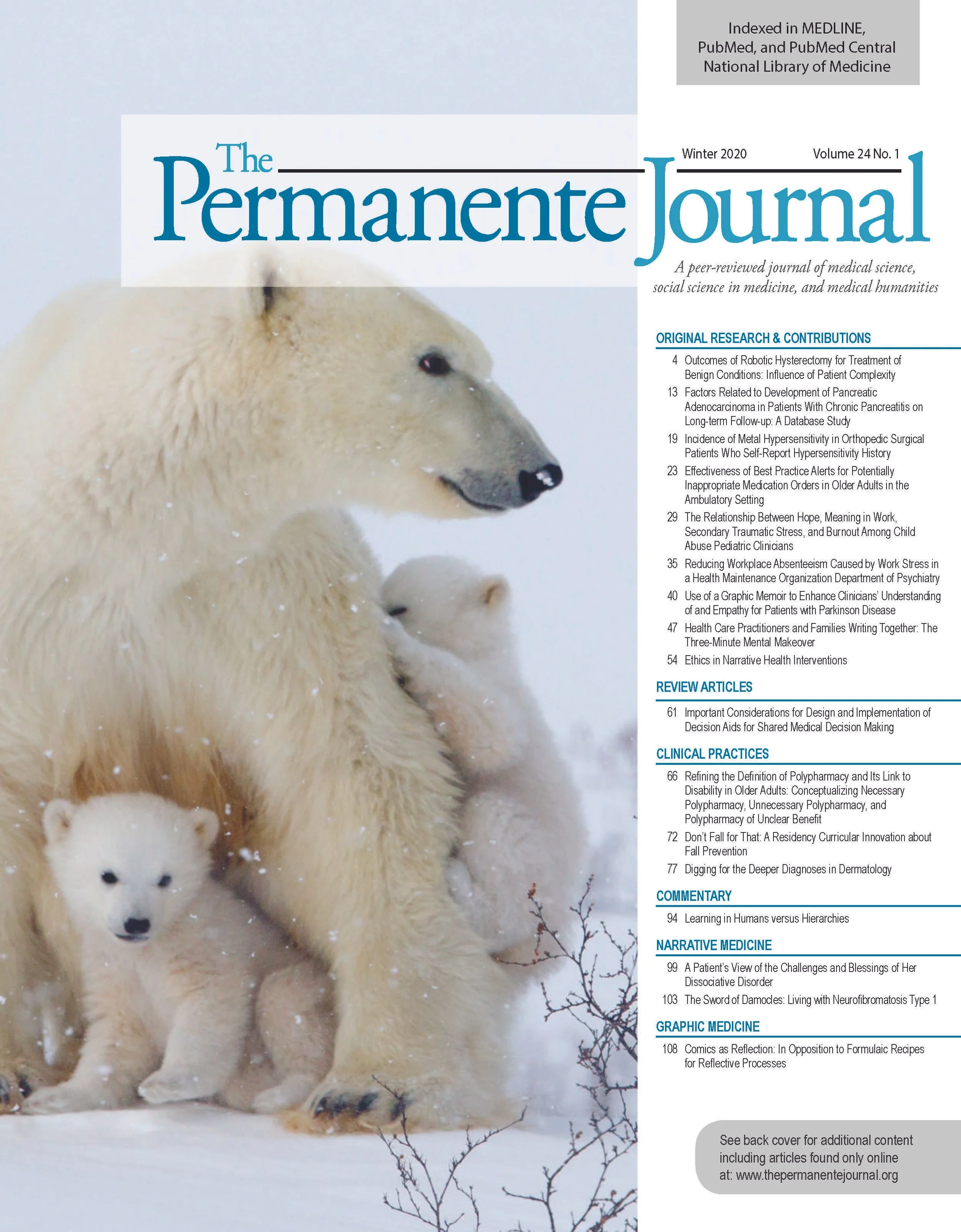
Publication I
Learning in Humans versus Hierarchies (2019)
A Scientific Question
How does learning within human hierarchies differ from individual human learning?
Primary Contribution
Proposed that learning within human hierarchies differs fundamentally from individual human learning because the resources necessary for learning become structurally distributed across supervisory relationships rather than remaining under the control of a single individual.
Key Insight
Individual learners may directly integrate the observations, expertise, time, resources, and authority necessary to investigate problems, test explanations, and apply new understanding. Within human hierarchies, however, these learning resources become structurally separated.
Supervisors typically control organizational resources such as time, funding, authority, priority, and action, while those closest to the work often possess the frontline expertise and intellectual currency necessary to recognize emerging problems, identify recurring patterns, discover previously unrecognized limitations in current understanding, and generate alternative explanations.
This structural distribution dramatically expands humanity's capacity for specialization, coordinated effort, and collective problem solving. At the same time, however, it creates a fundamental dependency: continued organizational learning requires the intellectual resources distributed throughout the hierarchy to become available to—and effectively integrated with—the organizational resources necessary to investigate and act upon them.
A hierarchy may therefore possess the knowledge necessary to recognize or solve a problem without that knowledge being available for organizational problem solving.
Organizational learning consequently depends in part upon supervisors recognizing, valuing, and effectively integrating frontline intellectual currency with the organizational resources under their control.
These findings led to the next scientific question:
If organizational learning depends upon supervisors integrating organizational resources with the frontline intellectual currency of those they supervise, what influences whether supervisors recognize, evaluate, and integrate that intellectual currency?
-
Emberton, Mihal. "Learning in humans versus hierarchies." The Permanente Journal 24 (2019): 19-083.

Publication II
Unconscious Bias Is a Human Condition (2021)
Scientific Question
Why do supervisors fail to recognize and integrate frontline intellectual currency within human hierarchies?
Primary Contribution
Proposed that unconscious bias is not merely prejudice, but an inherent feature of human cognition arising from universal problem-solving processes through which people recognize recurring patterns, develop explanatory rules, and apply those explanations to solve problems—while sometimes unconsciously failing to recognize evidence that their existing explanations are incomplete or incorrect.
Key Insight
The structural distribution of learning resources within human hierarchies creates a fundamental cognitive vulnerability.
For individual learners, corrective information may be directly available through their own observations and experience. Within hierarchies, however, supervisors may control organizational resources and decision-making authority while the observations, expertise, and corrective intellectual currency capable of revealing limitations in supervisory understanding reside elsewhere in the hierarchy.
The same hierarchical structure that expands humanity's capacity for specialization and collective problem solving can therefore insulate unconscious supervisory cognitive error from the intellectual currency necessary to recognize and correct it.
Corrective knowledge may exist within the hierarchy without being recognized, appropriately valued, or incorporated into supervisory understanding. Existing explanations may consequently persist despite evidence that they are incomplete or incorrect.
Organizational resources then remain disconnected from the knowledge necessary to recognize emerging problems, refine existing explanations, and develop new solutions. Thus, the vulnerability does not arise simply because human beings make unconscious cognitive errors; it arises because hierarchical structure can separate the person experiencing the cognitive error from the knowledge necessary to expose it.
Continued organizational learning therefore depends upon mechanisms capable of reconnecting supervisory understanding with corrective intellectual currency distributed throughout the hierarchy.
These findings led to the next scientific question:
If human hierarchies can insulate unconscious supervisory cognitive error from the corrective intellectual currency necessary to reveal it, what underlying cognitive and epistemological mechanism determines whether supervisors recognize and correct limitations in their own understanding—or instead suppress the corrective intellectual currency necessary to expose them?
-
Emberton, Mihal. "Unconscious bias is a human condition." The Permanente Journal 25 (2021): 20-199.

Publication III
Etiology of Belief-Behavior Systems and Hierarchies (2021)
Scientific Question
What underlying cognitive and epistemological mechanism gives rise to supervisory belief–behavior systems across human hierarchies?
Primary Contribution
Investigated the relationship among supervisory belief–behavior systems, subordinate adaptation, and organizational knowledge flow, and proposed underlying intention and unconscious epistemological belief concerning the certainty of one's own knowledge as components of the cognitive and epistemological architecture underlying recurring supervisory belief–behavior systems.
Key Insight
The investigation connected supervisory cognition, subordinate adaptation, and organizational knowledge flow.
Subordinates are not passive recipients of supervisory behavior. They adapt to the supervisory environments in which they operate, and those adaptations influence whether frontline intellectual currency becomes available to supervisory authority.
Within autocratic supervisory belief–behavior systems, conformity, disengagement, resistance, and truth-seeking disclosure may emerge as adaptive responses. Disengagement and conformity may conceal or restrict corrective intellectual currency, while truth-seeking disclosure may reveal observations, expertise, disagreement, and alternative explanations despite the personal risks associated with challenging supervisory certainty.
Supervisory belief–behavior systems simultaneously influence what happens to that intellectual currency once it encounters authority: whether observations, questions, alternative explanations, disagreement, and corrective information are sought, valued, evaluated, and integrated—or ignored, discouraged, discounted, and suppressed.
Supervisory belief–behavior systems therefore influence organizational knowledge flow through two interacting pathways: how supervisors respond to frontline intellectual currency and how those responses influence whether subordinates continue to reveal, withhold, or adapt their communication of that intellectual currency.
The investigation thereby connected supervisory cognition with the structural problem identified by the earlier publications: the same hierarchy that distributes the resources necessary for collective learning can either facilitate their integration or prevent their recombination.
From the findings to the integrated framework
Building upon and integrating these findings, the Belief–Behavior Systems Archetype proposes that supervisory cognition arises from the interaction of two independent components:
Underlying intention — the end toward which supervisory authority is directed: advancing the common good or advancing personal power at the expense of the common good.
Unconscious epistemological belief — the certainty supervisors unconsciously attribute to the correctness and completeness of their own knowledge.
The two components perform different functions within the proposed architecture. Underlying intention concerns what supervisory authority is ultimately directed toward, while unconscious epistemological belief influences the supervisor's relationship to knowledge, uncertainty, and intellectual currency held by others.
Their interaction gives rise to four recurring supervisory belief–behavior systems:
Democratic — common-good intention + epistemological humility
Autocratic — common-good intention + epistemological certainty
Manipulative — personal-power intention + epistemological certainty
Exploitative — personal-power intention + epistemological humility
Epistemological humility therefore does not necessarily imply benevolent intention, just as epistemological certainty does not necessarily imply malicious intention.
When underlying intention is directed toward advancing the common good, supervisors who unconsciously approach their knowledge with epistemological humility—“I think I am right, but I do not know that I am right”—remain open to the possibility that their current understanding may be incomplete. Frontline intellectual currency therefore retains inherent value because it may reveal previously unrecognized limitations in current understanding.
Supervisors who unconsciously approach their knowledge with epistemological certainty—“I know that I am right”—may instead perceive corrective intellectual currency as disruptive, unnecessary, or without value because it challenges supervisory certainty. Organizational tools and resources that could facilitate inquiry and learning may consequently be used to produce conformity, suppress corrective information, and preserve existing assumptions.
The integrated framework proposes that the interaction between underlying intention and unconscious epistemological belief gives rise to four recurring supervisory belief–behavior systems: democratic, autocratic, manipulative, and exploitative.
These findings led to the next scientific question:
If the beliefs underlying supervisory cognition operate largely outside conscious awareness, how can supervisory belief–behavior systems be recognized, empirically investigated, and intentionally transformed to strengthen continued learning across human hierarchies?
-
Emberton, Mihal. "Etiology of Belief–behavior Systems and Hierarchies." The Permanente Journal 25 (2021): 20-269.
Continuing the Research Program
Together, these three publications reveal a continuous scientific progression from the structural distribution of learning resources, to the cognitive vulnerability created by that distribution, to the supervisory and subordinate belief–behavior systems that influence organizational knowledge flow, and ultimately to a proposed cognitive and epistemological architecture explaining why these recurring patterns emerge.
The first publication proposed that human hierarchies distribute the resources necessary for learning across supervisory relationships. The second proposed that this distribution can insulate unconscious supervisory cognitive error from the corrective intellectual currency necessary to expose it. The third investigated how supervisory cognition and subordinate adaptation interact to influence whether that intellectual currency becomes available for organizational problem solving and proposed cognitive and epistemological foundations underlying recurring supervisory belief–behavior systems.
Taken together, the research therefore connects two levels of explanation: the structural distribution of intellectual and organizational resources within hierarchies and the cognitive and epistemological processes affecting whether those resources contribute to collective learning.
The Belief–Behavior Systems Archetype develops from these findings as a proposed explanatory, diagnostic, and developmental framework. It seeks not only to explain why supervisory belief–behavior systems arise, but also to investigate whether their otherwise unconscious foundations can be recognized through recurring observable expressions.
Because unconscious epistemological beliefs cannot be directly observed, the framework proposes that supervisors may examine patterns in their feelings and thoughts when encountering new or corrective knowledge; whether they actively seek, value, evaluate, and use frontline intellectual currency; how they use organizational tools, resources, and accountability to facilitate inquiry and learning or produce conformity; and the adaptive patterns that emerge among those they supervise.
These manifestations are proposed as indirect feedback rather than definitive labels. No single behavior establishes the underlying supervisory belief–behavior system. Instead, recurring relationships among supervisory cognition, resource use, knowledge flow, and subordinate adaptation provide patterns that can be investigated for evidence of the otherwise unconscious cognition shaping the supervisory relationship.
Curiosity toward previously unrecognized knowledge, active valuing and use of frontline expertise, transparency, collaborative inquiry, engagement, and truth-seeking disclosure may provide evidence of conditions facilitating continued learning. Conversely, defensiveness toward corrective information, use of organizational resources to reinforce predetermined conclusions, coercion, conformity, disengagement, resistance, censorship, or suppression of corrective intellectual currency may indicate conditions in which knowledge flow and learning are constrained.
The developmental proposition therefore extends beyond changing observable supervisory behavior. It proposes using recurring patterns of thought, feeling, behavior, resource use, knowledge flow, and subordinate adaptation as feedback through which supervisors may recognize and question the unconscious cognition giving rise to those patterns.
Supervisory development consequently involves investigating the cognition underlying recurring supervisory behavior, strengthening intellectual humility, and intentionally creating conditions in which frontline intellectual currency can be recognized, valued, evaluated, and integrated with the organizational resources necessary for continued learning.
The resulting scientific progression can be summarized as:
Distributed Learning Resources → Cognitive Vulnerability → Supervisory Cognition → Supervisory Belief–Behavior Systems → Subordinate Adaptation + Knowledge Flow → Integration or Separation of Distributed Learning Resources → Organizational Learning and Problem Solving
The continuing research program now asks whether these proposed relationships can be empirically measured, tested, and refined; whether supervisory belief–behavior systems can be reliably recognized through their observable manifestations; and whether supervisors can intentionally identify and correct unconscious cognitive error in ways that preserve or restore continued learning across diverse human hierarchies.

Monograph
The Belief-Behavior Systems Archetype: Learning, Truth, Justice, and the Science of Human Hierarchies
Scientific Question
What are the broader implications of this proposed explanatory, diagnostic, and developmental framework for humanity's capacity to continue learning across human hierarchies?
Primary Contribution
The monograph extends the peer-reviewed research into a broader interdisciplinary investigation of how supervisory cognition influences whether the distributed resources necessary for learning are recognized, valued, and effectively integrated—and how that process may shape humanity's capacity for truth-seeking, problem solving, justice, democratic governance, institutional adaptability, and long-term human flourishing.
It develops the Belief–Behavior Systems Archetype beyond explanation by investigating how observable patterns of supervisory thought and feeling, the ways supervisors value and utilize frontline intellectual currency, their use of organizational tools and resources, and the adaptive behaviors of those they supervise may provide feedback about otherwise unconscious epistemological beliefs. These observable patterns create opportunities to investigate and correct unconscious cognitive error, strengthen intellectual humility, and intentionally preserve or restore the conditions necessary for continued learning, innovation, problem solving, and institutional adaptation.
Human adaptive progression:
Recurring Patterns → Learning → Increasingly Accurate Explanatory Rules (Truth) → Improved Capacity to Solve Problems → Justice → Human Flourishing → Sustainable Human Hierarchies
BBSA institutional mechanism:
Distributed Learning Resources → Supervisory Cognition → Recognition, Valuation, and Integration of Intellectual Currency → Continued Organizational Learning → Institutional Adaptability
Democratic human hierarchies are proposed to preserve the cognitive and institutional conditions that enable this adaptive progression by facilitating the recognition, valuation, and integration of distributed learning resources.
-
Emberton, M. (2026). The Belief–Behavior Systems Archetype: Learning, Truth, Justice, and the Science of Human Hierarchies. Mihal Emberton. https://doi.org/10.5281/zenodo.21960008